


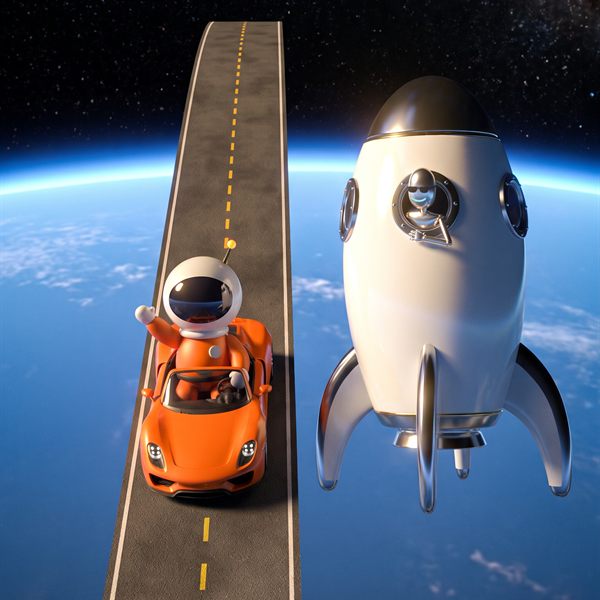
Space is an hour's drive away.
Point your car straight up at 62 mph and you'd cross the edge of space, 62 miles up, in about an hour. Staying there is the hard part: the Space Station flies at 17,500 mph.
Source: NASA JPL ↗Facts
Small facts about enormous things, each checked against the source linked under it.
One page per question, with the short answer, the facts, the sources and ideas for the classroom.
Point your car straight up at 62 mph and you'd cross the edge of space, 62 miles up, in about an hour. Staying there is the hard part: the Space Station flies at 17,500 mph.
Source: NASA JPL ↗

From its base on the seafloor, Hawaii's Mauna Kea rises more than 33,500 ft (10,210 m), most of it underwater. And the summit farthest from Earth's center is Chimborazo, in Ecuador.
Source: NOAA ↗
Between Greenland and Iceland, cold, heavy water pours over an undersea ridge and falls about 11,500 ft (3,505 m), more than three times the tallest waterfall on land.
Source: NOAA ↗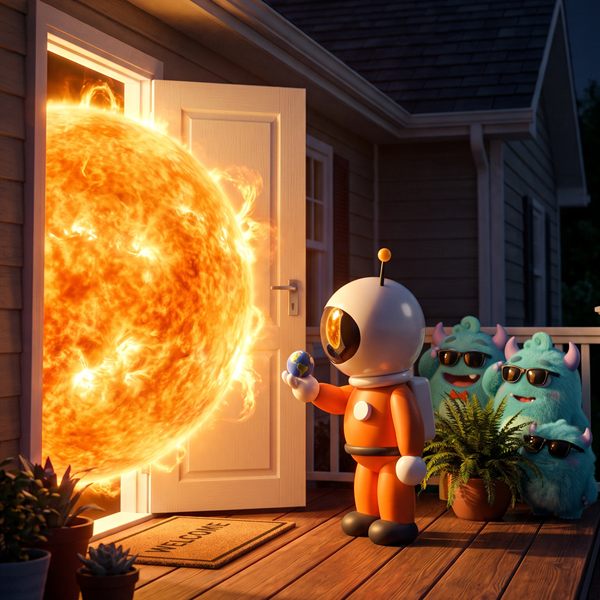
The Sun is 109 times wider than Earth. At that scale, the nickel would orbit about 240 yards from your door.
Source: NASA ↗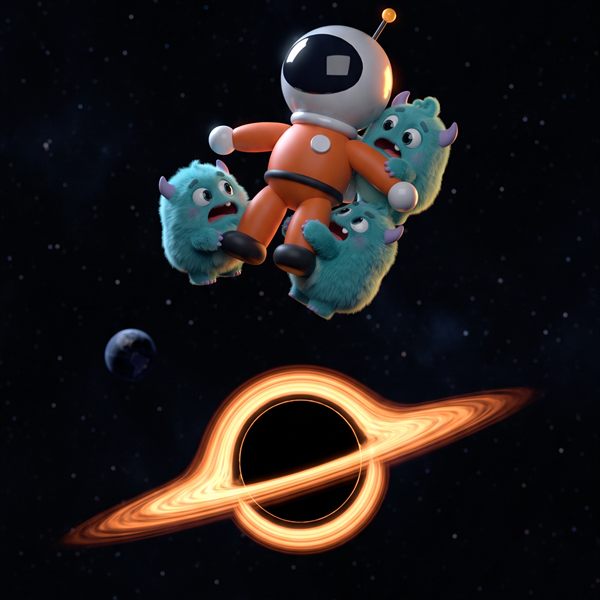
Earth would keep the same orbit (same mass, same pull). It would just get very dark and very cold. Relax: the Sun is far too small to ever become one.
Source: NASA ↗Every episode measures something real against one tiny human, 1.7 m tall. Hover a mission (or tap it) to send Tiny Human along the ruler. Each step on the scale is ten times the one before.

Not everything is about size. The surface of the Sun is about 5,500 °C, roughly 150 times your body temperature. Tiny Human is going anyway.
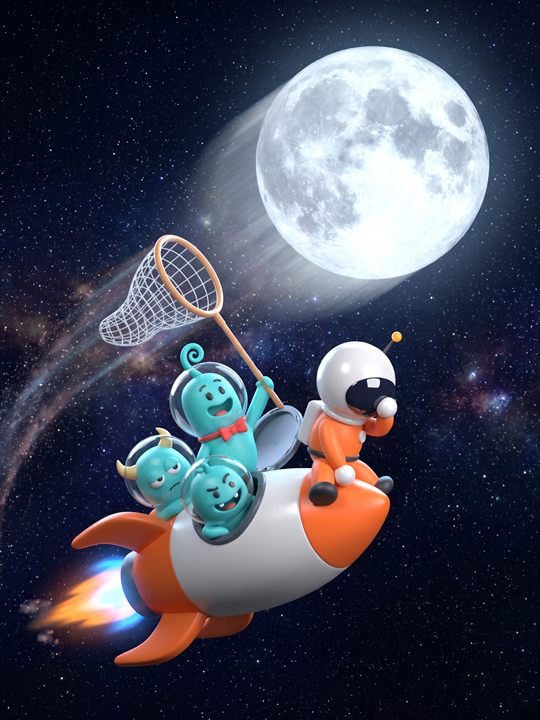
Free comic · ages 5+
The Blorps chase the Moon with a butterfly net. Get the whole comic free by email.